
On the Benefits of Pausing: Quiet rooms for events
Why a quiet room?
As invigorating as events are, sometimes the excitement spills into overwhelm. A quiet room, sometimes also called a wellness room, balances the constant activity of your conference or expo, allowing your guests a place to relax and recharge so they can experience the most of your great event.
It’s a low-cost, low-lift way to be responsive to the sensory needs of event participants, and if designed thoughtfully, can also provide a sensory-friendly space for neurodivergent attendees.
Best practices
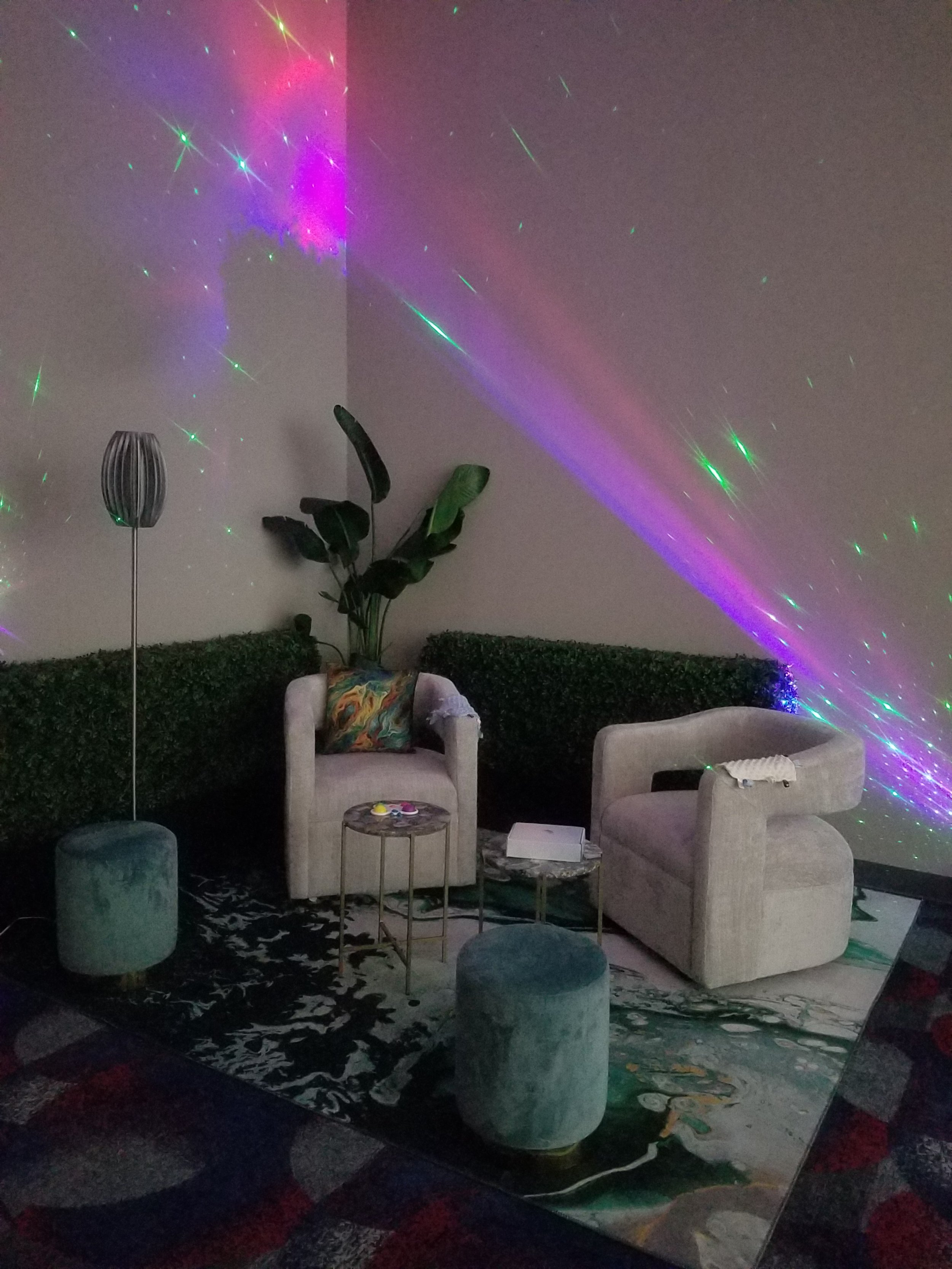
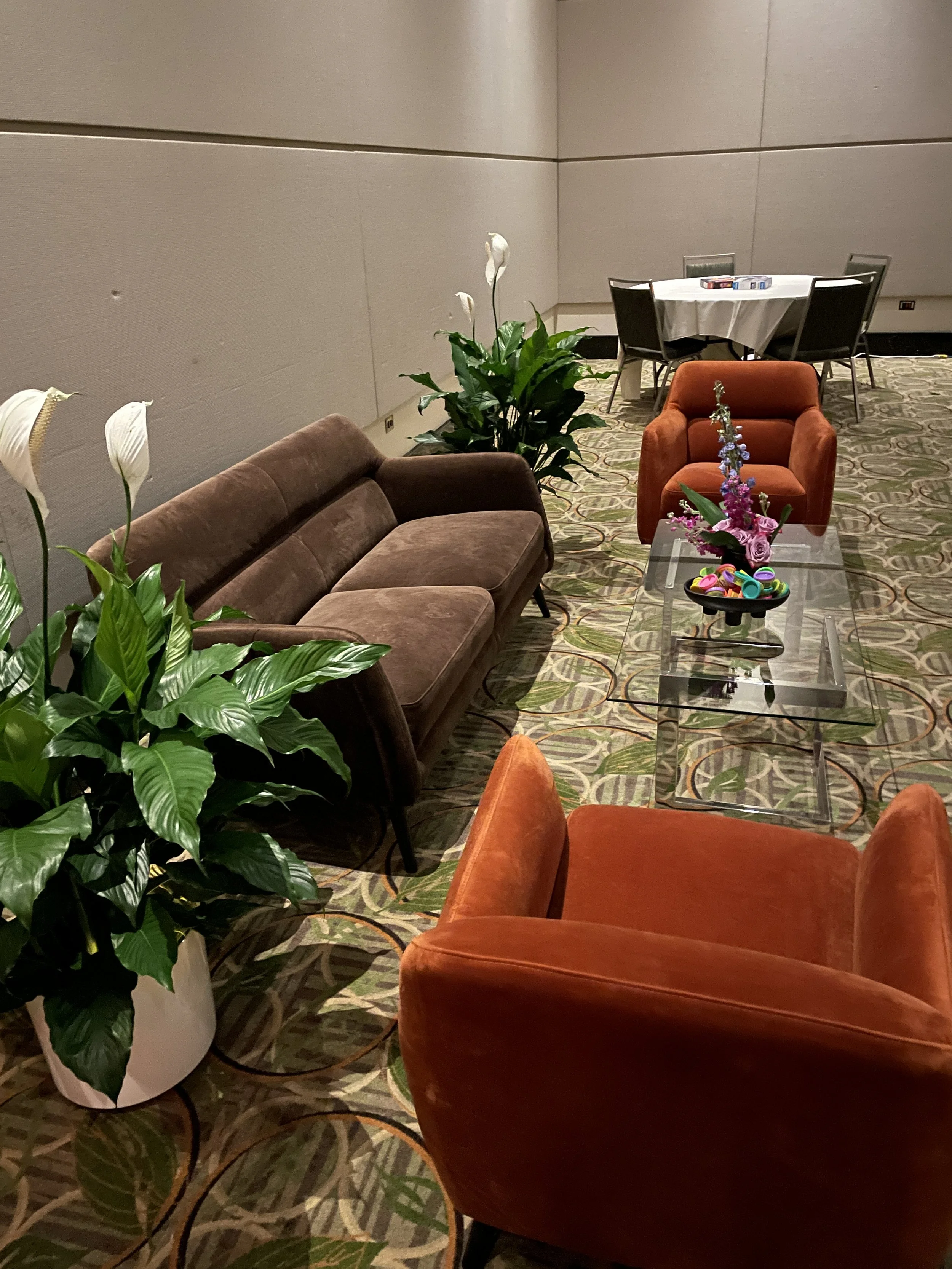
Your room should focus on comfort and ease. Think: low lighting, soft, cozy textures, screen-free activities.
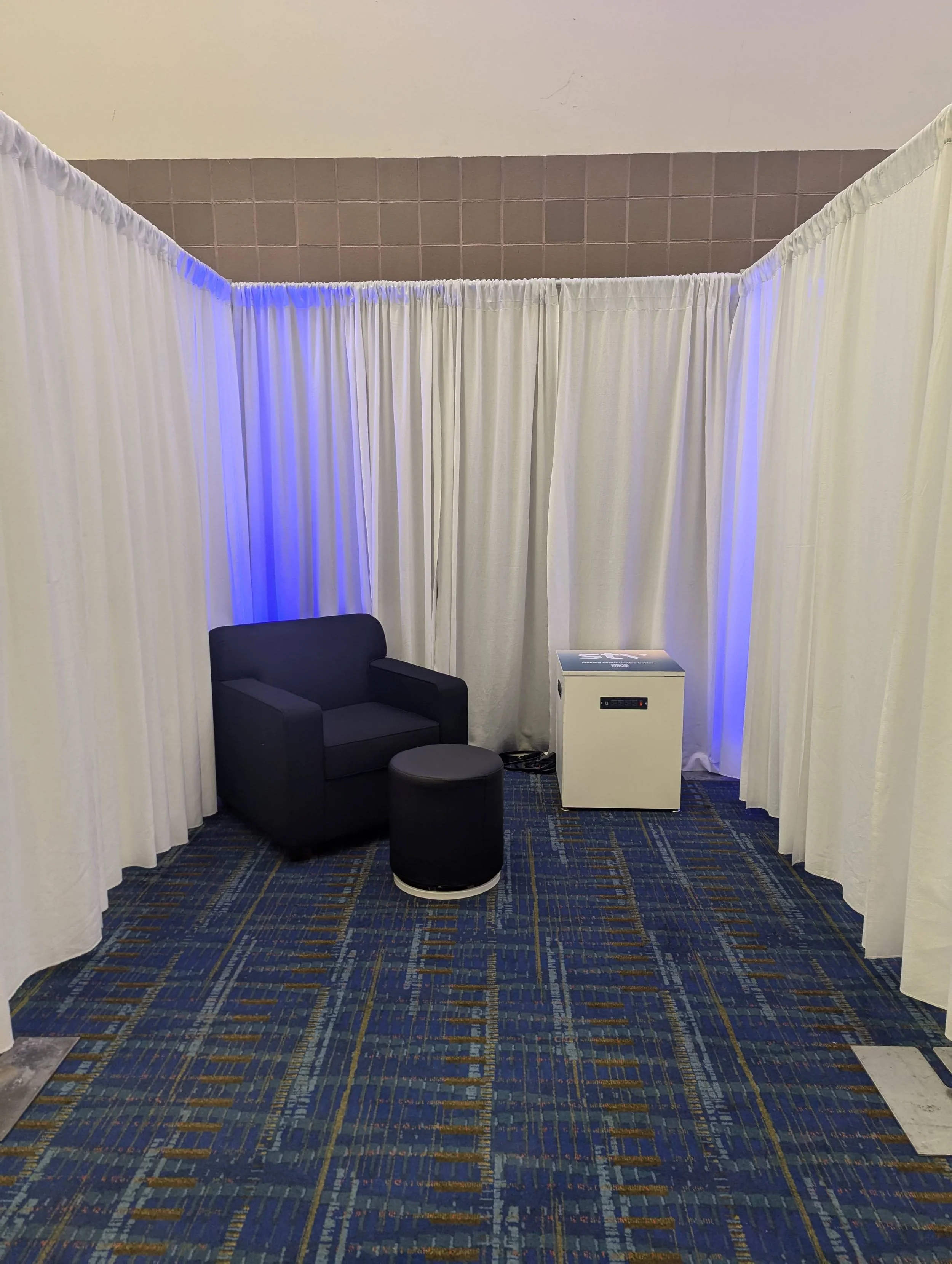
The room doesn’t need to be fancy. Create some partitioned areas with pipe and drape, furnish the space with comfortable couches and chairs, and provide some refreshments and ways to unwind for a bit.
The “quiet” part of this room is important; it helps people re-center. Place your quiet space close enough to the main event to be navigable, but far enough away to escape overflow sound.
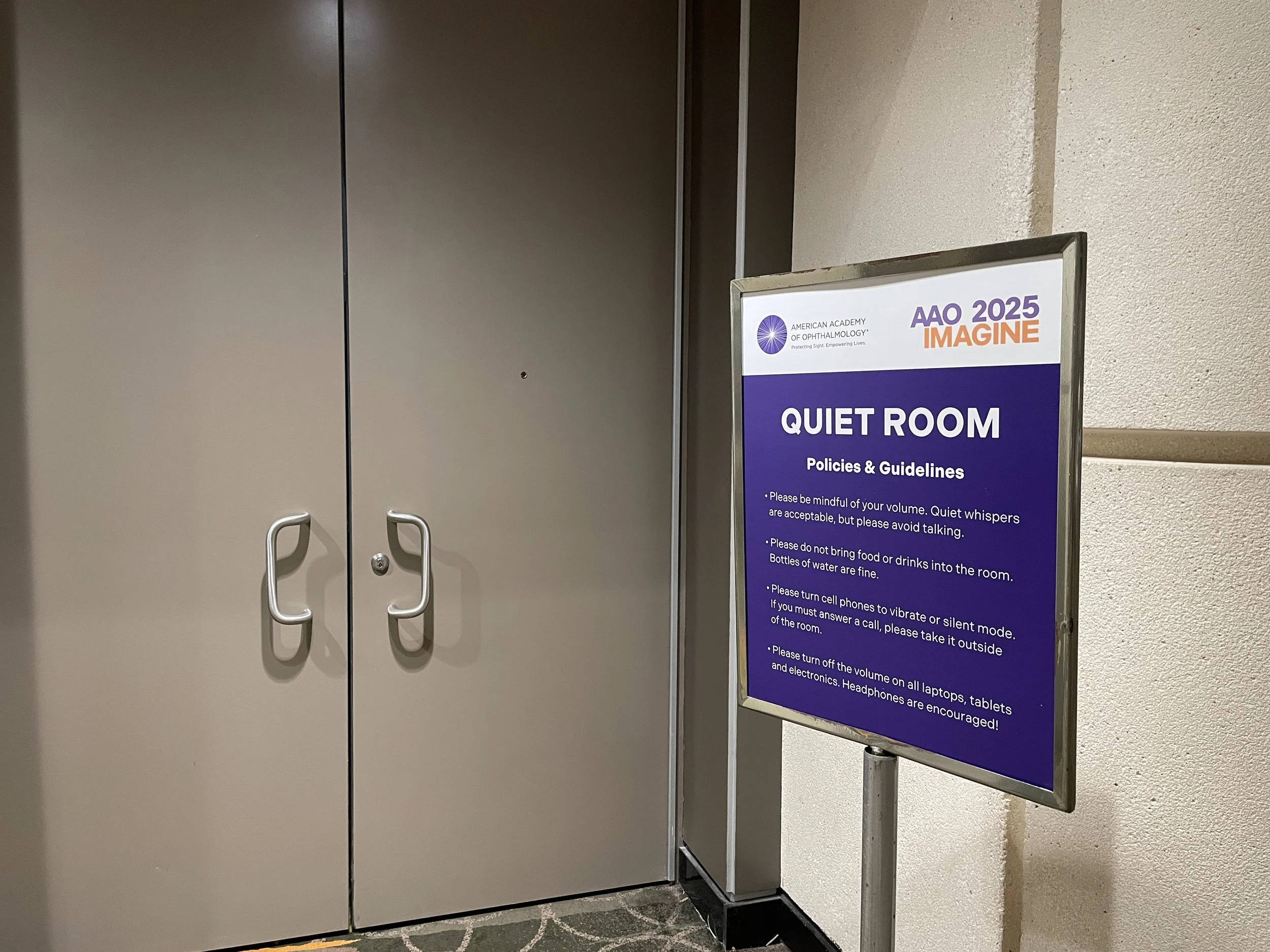
More than wayfinding, signage can set guidelines for usage of your quiet room.
This should be a space free of cell-phones, laptops, work, and conversation. A sign posted at the door explaining the room’s purpose and boundaries may be helpful.
People are so used to “unwinding” using their screens. Provide other ways to calm the nervous system, using sensory games or tools that are proven ways to relax, like gentle stretching or movement (which can be encouraged with yoga mats or visual guides.


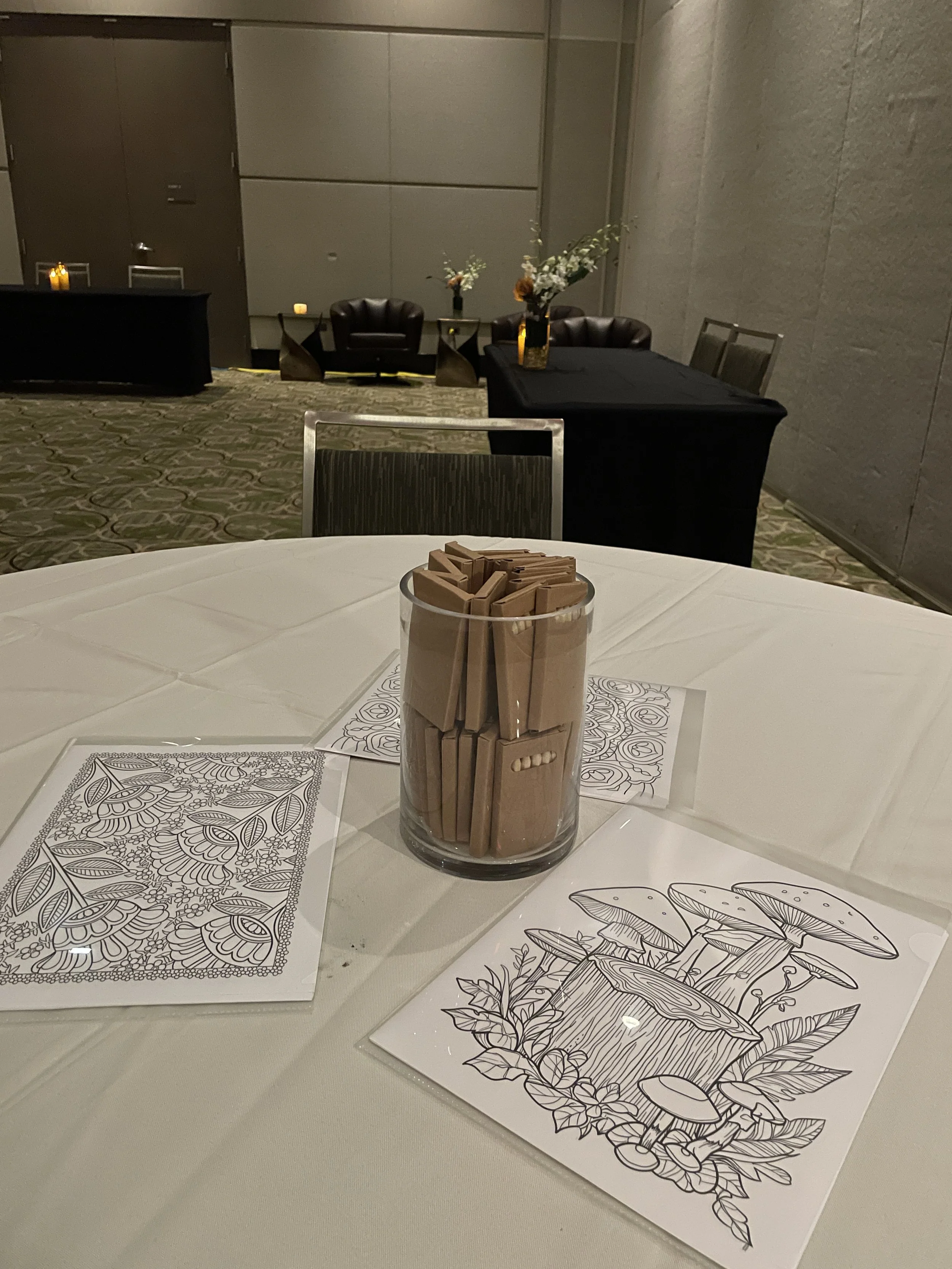
What to avoid
Try not to take on too much in one room. While we encourage events to provide space for nursing, prayer, and fitness among others, make them distinct, dedicated areas separate from your quiet room.
We also discourage renting an empty room with no thoughtful design put into it. This will be a waste of your money, be perceived as careless, and will end up as a workspace rather than a recharge room.
Measure effectiveness
To see if your room is providing the comfort intended, create a feedback mechanism in the room. This can be as simple as a “Did this room meet your needs?” button near the egress door. Or, check out this cute way of expressing satisfaction at an ophthalmology convention – placing cotton eyeballs into glass jars.
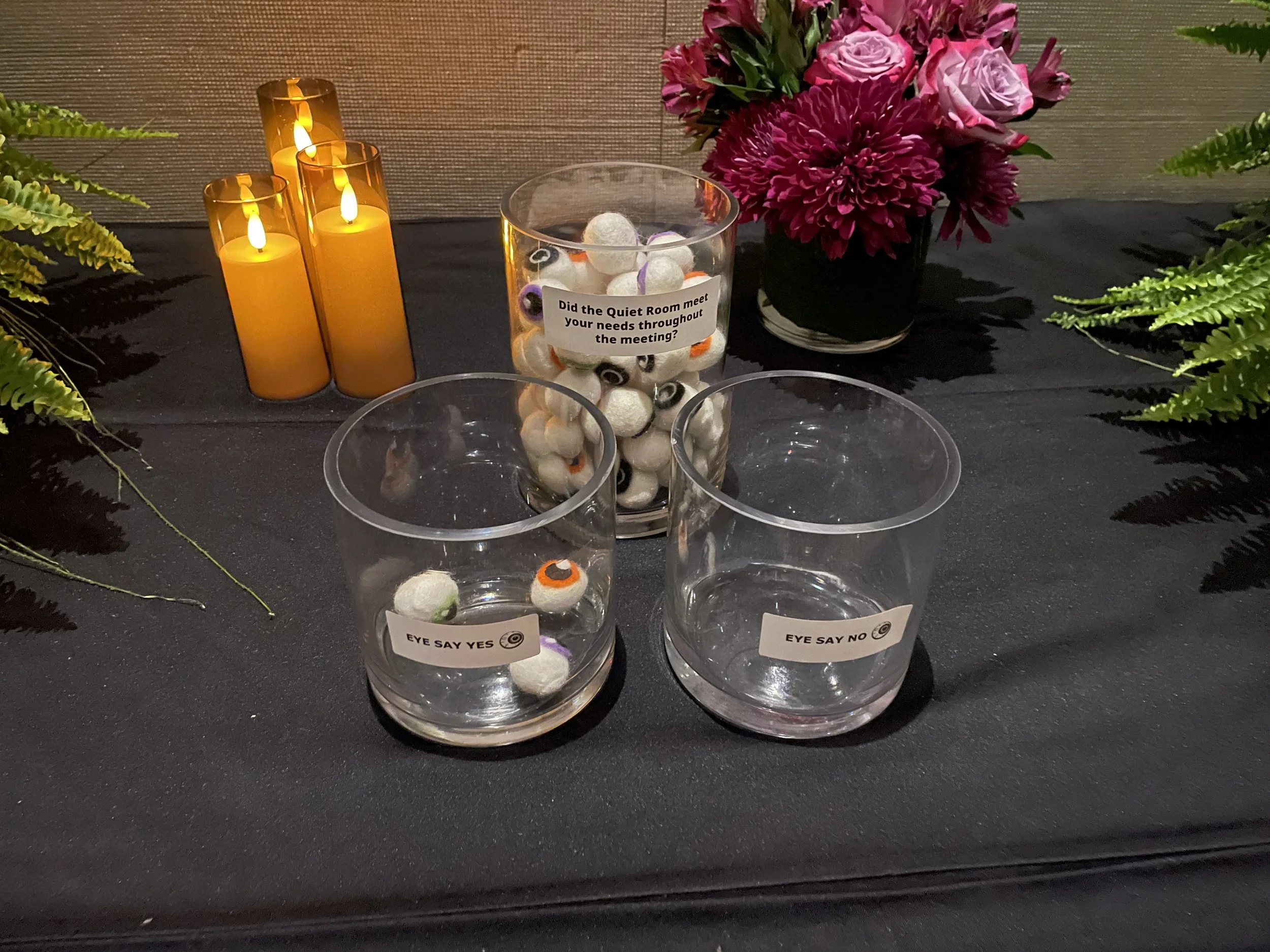
A creative way to measure feedback from the users of the quiet room. For this ophthalmology conference, they kept everything on-theme@
Another way to assess its use is by counting beverage refills for refreshments provided in the room. You’ll have to instruct your caterer to do so only on an as-needed basis, then take usage estimates as a ballpark indicator of the traffic through the room.
The room does not have to be staffed, and in fact an attendant with a people-counter at the door feels like the wrong vibe. However, having someone pass through occasionally to check on the space and people using it feels considerate and will help you understand the room’s overall use.
Make it budget-friendly
Quiet rooms are generally low-cost, needing only a few, small items that can be reused or donated at the end of the event. However, these wellness activations can be great opportunities for sponsorships, where your business partners can demonstrate their care for attendees. Leverage sponsorships to cover other, less-flashy sustainability activations that nonetheless support participant wellness and event impacts, like implementing front-of-house composting, or creating a dedicated sustainability education space.
Sustainability cares for both people and planet
Wellness and environmental sustainability go hand in hand. Both emphasize that our surroundings affect our health and well-being. By taking care of your event participants in this way, you’re creating a more mindful culture, showcasing the values that uphold both pillars: people and planet. Try designing a quiet room for your next event and let us know if you come up with any new tips to share.
-------------------------
Honeycomb Strategies specializes in impactful solutions for sustainable events, sports, and venues. Send us your thoughts, questions and feedback at hello@hcsustainability.com