
A Case Study of PCMA’s Convening Leaders with Accessible Travel Solutions and Honeycomb Strategies
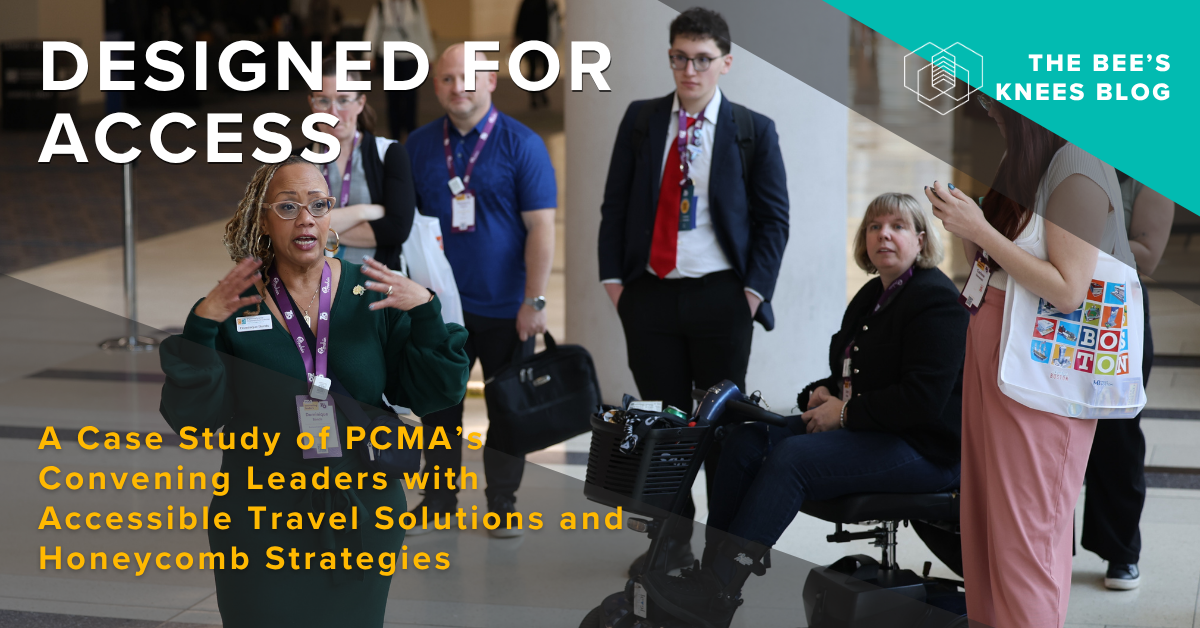
Sustainability and accessibility share the same foundation: thoughtful design.
Working together at PCMA’s Convening Leaders 2026 (CL26), Accessible Travel Solutions and Honeycomb Strategies collaborated with the PCMA team to integrate social impact and accessibility into the fabric of its flagship event, part and parcel of PCMA’s commitment to “Sustainability by Design.”
John Sage of Accessible Travel Solutions elucidates that “both sustainability and accessibility ultimately focus on designing systems that work for a wider range of people,” coinciding with Honeycomb Strategies’ core belief in holistic sustainability that encompasses environmental conservation, human wellness, community strength, and economic prosperity. Together, these consultants supported the PCMA team in creating its most accessible and welcoming event to date.
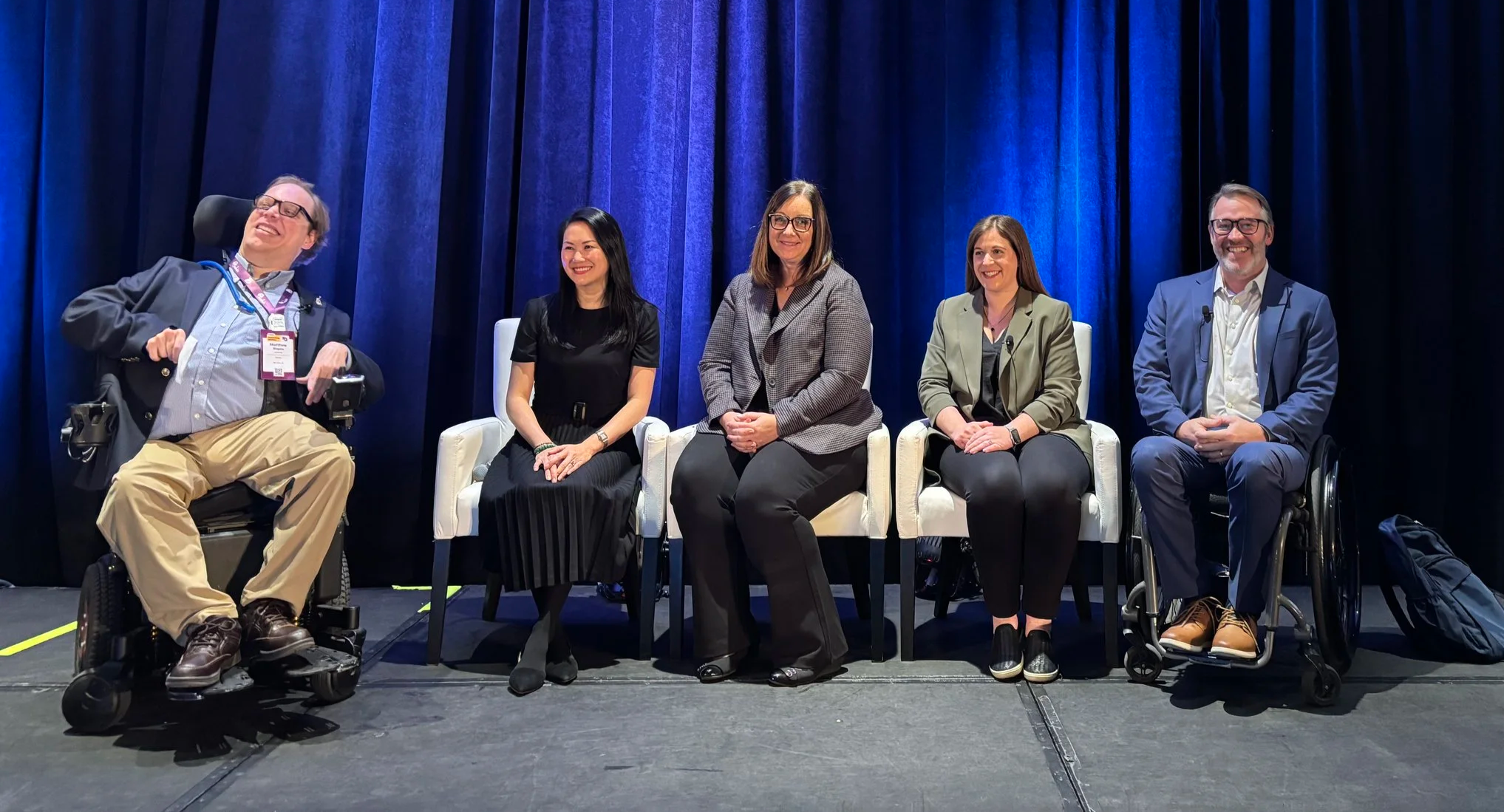
Accessibility Panel at PCMA Convening Leaders 2026:
Highlighting best practices in inclusive event design and delivery.
Credit: Accessible Travel Solutions
A Growing Industry Focus
1 in 5 people have a disability.
Business event strategists and industry associations aren’t ignoring that data, they’re investing in solutions to integrate accessibility as a vital customer care solution from the outset.
PCMA is leading the charge. In 2025, they contracted Accessible Travel Solutions to conduct a thorough audit of accessibility, lead a tour of the host venue Pennsylvania Convention Center, and staff an onsite information desk for accessibility. John Sage shares that “the goal was not only to support attendees during the conference, but also to demonstrate practical accessibility solutions that other event organizers can learn from and replicate.”
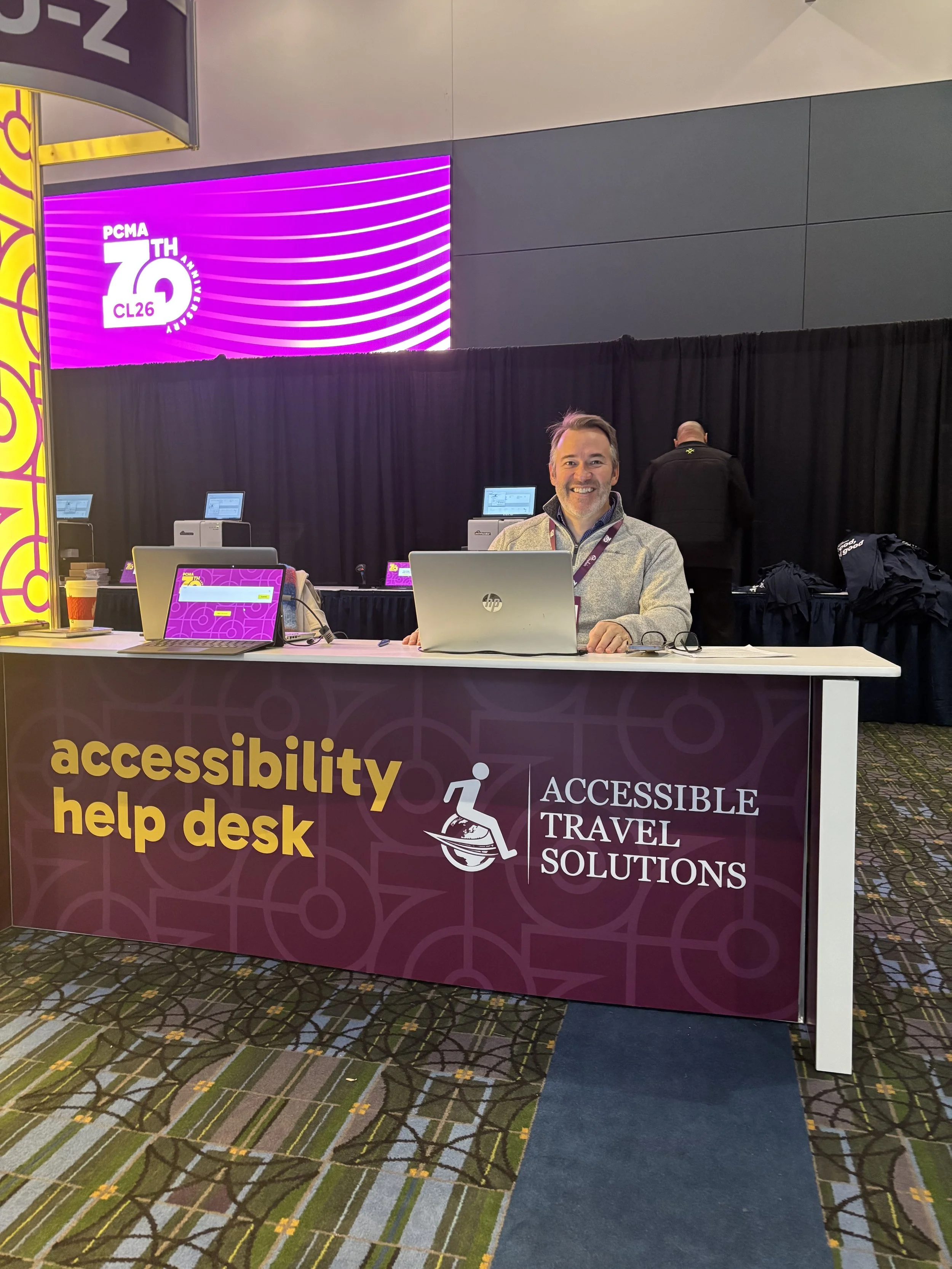
Accessible Travel Solutions staffing the accessibility help desk at Convening Leaders 2026:
Providing real-time support and guidance to participants throughout the event.
Credit: Accessible Travel Solutions
Corey Clark of Honeycomb Strategies offers that though she includes recommendations for social sustainability in her consulting, the engagement with Accessible Travel Solutions demonstrated an enhanced commitment to accessibility. “It shows PCMA going the essential mile to make the event welcoming and valuable to more people. Hand-in-hand with measuring environmental impact, Convening Leaders is adapting and growing to meet the demands of our time.”
PCMA helps to make accessibility a more prominent design topic throughout the global business events industry by demonstrating accessible design and through visibility of its efforts.
Best Practices
Attract your audience early with good information.
Participants with disabilities frequently make their event plans ahead of time, taking into consideration what they know about accommodations at the event. Providing accessibility information clearly and early is essential to attracting event-goers who may need accommodations, like this example from PCMA’s CL26. It’s a best practice for the venue and planners as well, who can prepare their services based on requests received in advance.
Train and staff your event appropriately.
Even if the venue itself passes muster on sustainable infrastructure, if the event staff and volunteers aren’t trained to assist and accommodate participants with disabilities, the event isn’t set up for success. A well-trained team will work with participants with disabilities with confidence and respect, ensuring carefully planned activations and accommodations are successful. A good example of this was PCMA team members’ highly visible “Accessible Seating” lighted signs at mainstage sessions.
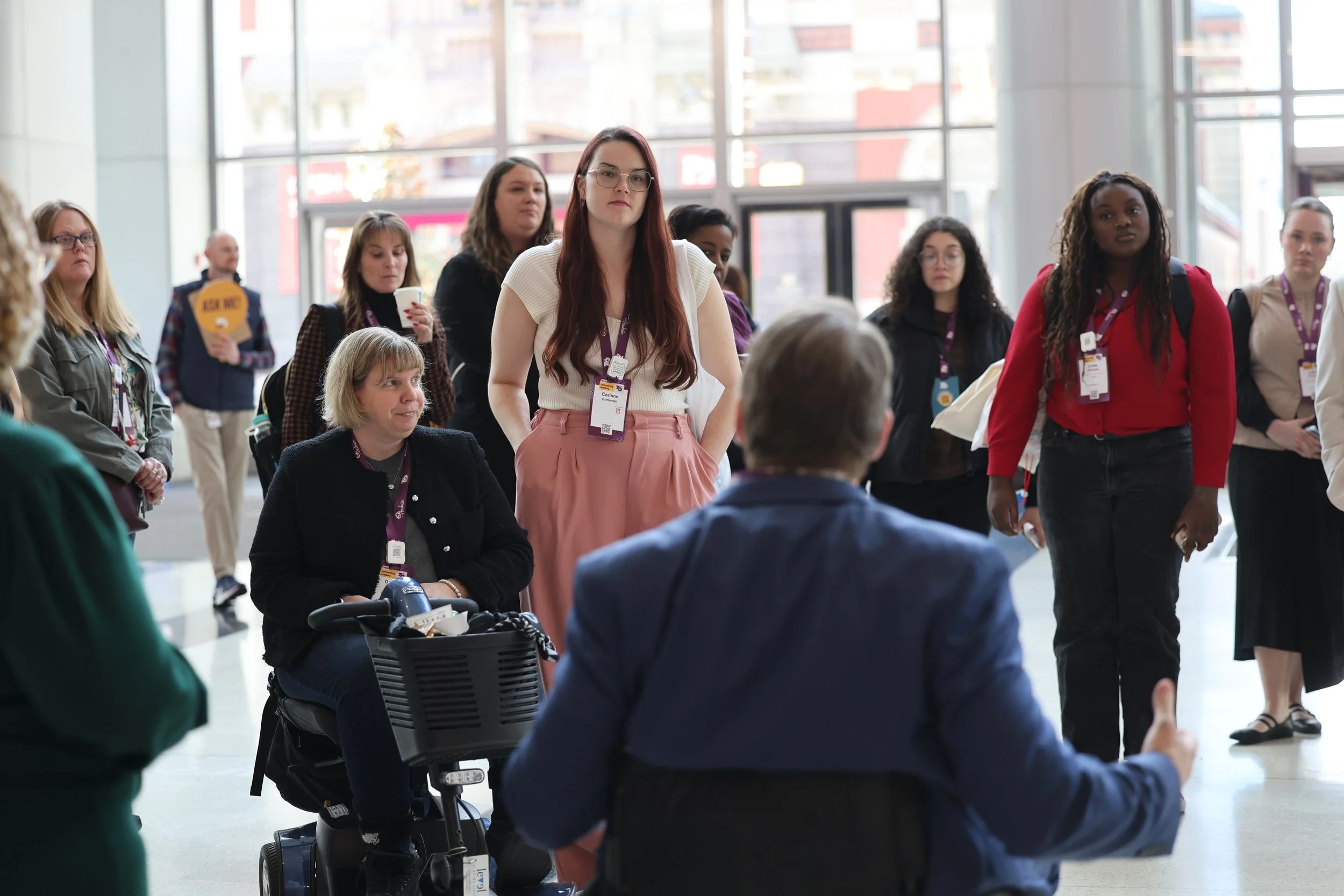
John Sage leading an accessibility tour at Convening Leaders 2026:
Demonstrating real-world accessibility considerations within the event environment.
Credit: PCMA
Incorporate Accessibility into agreements.
PCMA contracts with venues and vendors who are committed to accessibility and sustainability by including them in their RFPs. This transparent declaration of values and standards forms strong partnerships from the get-go.
How and What to Measure
With accessibility rising in visibility across the industry, it’s important for event strategists to assess if they are meeting standards to make their event inclusive.
For their audit, Accessible Travel Solutions looked for three pillars of accessibility: facilities, customer service, and information. Their criteria incorporates elements of ISO 21902, ISO 21542, and the Americans with Disabilities Act, along with Sage Best Practices developed through more than 200,000 hours of accessible travel planning experience. More than a scorecard, this audit is a learning opportunity for the events strategist, venue, and partners to grow their understanding of accessibility and make better choices to expand their inclusivity.
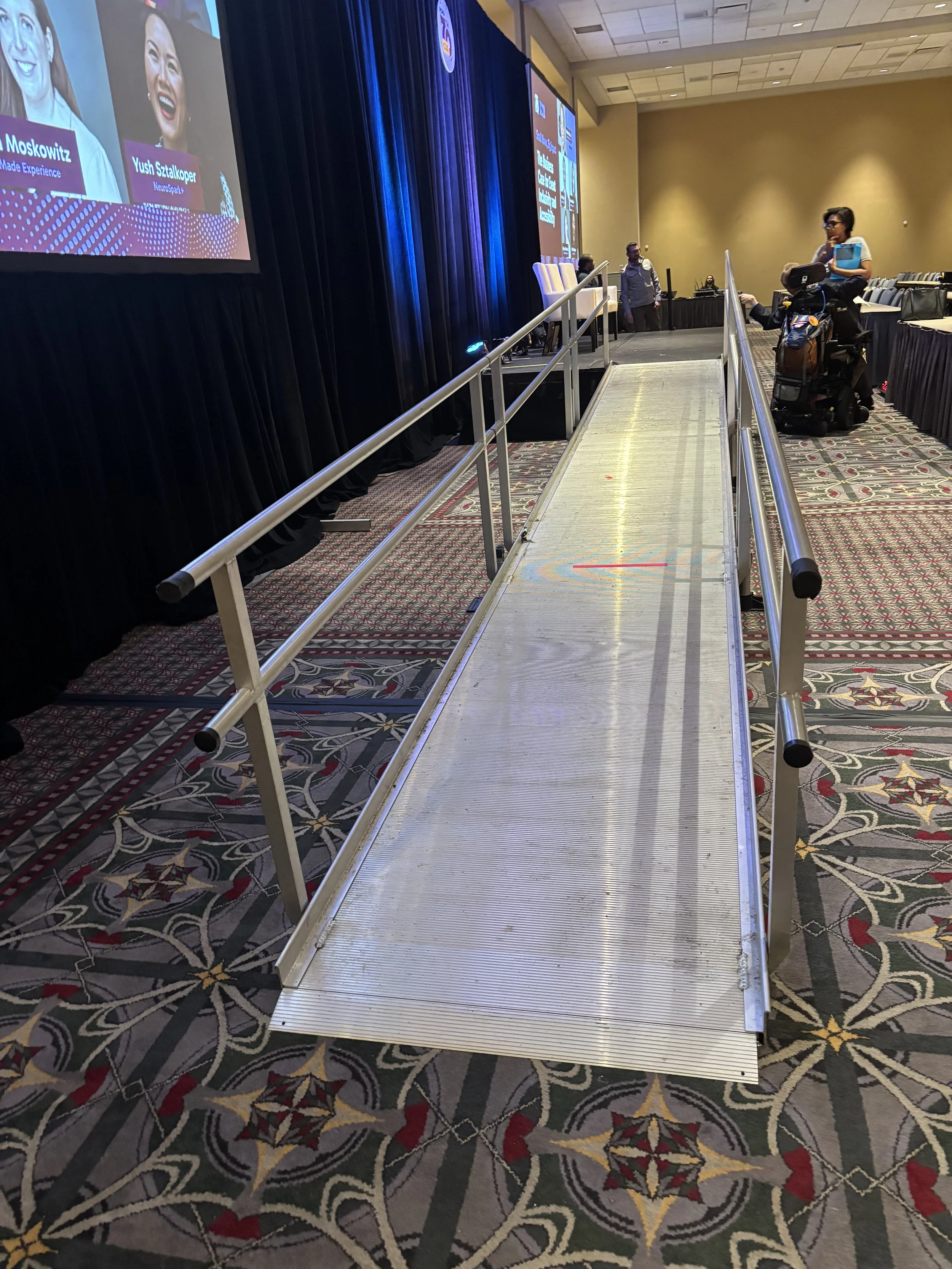
Accessible stage access at Convening Leaders 2026:
Featuring a ramped entry to ensure inclusive participation for all speakers.
Credit: Accessible Travel Solutions
Honeycomb Strategies helps PCMA incorporate some of those social impact design and planning choices from the start of the event cycle. This includes:
building quiet rooms, prayer rooms or lactation rooms to be welcoming, useful and safe spaces
checking for closed captioning and assisted listening options for education sessions
setting up activations that serve the community
thoughtfully planning catering choices for dietary and religious needs
working to build a wide array of engagement and activation strategies that appeal to different people.
Corey Clark reports that participants often remarked on the accessible features they encountered with gratitude, like providing clear signage, adjusting flashing lighting at a hosted party, and offering the help desk for potential challenges throughout the conference.
The Myths and Hang-Ups
Despite its growth in prominence, accessibility at events still faces challenges.
John Sage shares that “one of the most common misunderstandings is that accessibility only refers to physical infrastructure such as ramps or elevators.” This stops event planners from engaging with accessibility if they feel that it is only a venue issue.
Another factor is cost and demand. For example, ASL interpreters are in high demand but short supply, which often means that their fees can be prohibitive to smaller events. However, just as with environmental sustainability there’s an argument for cost effectiveness as well; while changing design or booking interpreters can have an up-front price, they attract participants who need and appreciate the services, increasing sales and retention. Purpose-built design elevates the organic value of your event, and customer loyalty rises with it.
Not a One-Time Project
Accessibility is an essential, ongoing part of sustainability.
And both are part of a long-term journey that must be continually re-engaged by organizers. When questions about event design are decided with care and understanding, as with PCMA’s Convening Leaders, it sets a powerful example for the entire industry.
Accessible Travel Solutions
Accessible Travel Solutions helps destinations, venues, tourism organizations, and event planners understand, improve, and communicate accessibility. Through accessibility assessments, training, and practical solutions, ATS helps organizations enhance the guest experience and better serve disabled travelers and event attendees with accessibility requirements.
-------------------------
Honeycomb Strategies specializes in impactful solutions for sustainable events, sports, and venues. hcsustainability.com
hello@hcsustainability.com